Biomedical engineering (BME) is an emerging and fascinating interdisciplinary area that exploits engineering principles to resolve healthcare/medical challenges in wide areas ranging from therapeutics to diagnostics. The discipline provides fundamental insights into healthcare technologies, improved diagnostics, medical devices, novel interventions (efficacious therapeutics, innovative drug delivery systems, technologies defining PK/PD behaviour of drugs, medical image technology for surgery), prostheses, implants, biomaterials, and artificial organs. 

The Department of Biomedical Engineering (BME) started in the academic year 2020-21 under the School of Engineering & Technology. The department offers a 4-year undergraduate program (B. Tech.) and a Ph.D. program in Biomedical Engineering. The program's primary goal is to cater to the need for skilled biomedical engineers in academia and industry. The department has a dedicated faculty with diverse research backgrounds, providing value-oriented teaching to students. With continuous development and expansion of its infrastructure, the department aims to be a recognized centre of teaching and research excellence with the highest academic and professional standards, producing quality graduate students.

Frequently Asked Questions (FAQs)

General

1. How is this program the first of its kind in India?

○ The B.Tech program in Biomedical Engineering is an interdisciplinary undergraduate program offered by the Department of Biomedical Engineering at Central University of Rajasthan that focuses on training engineers in state-of-the-art healthcare technologies. The program focuses on training engineers in designing medical devices, biomedical imaging, natural and artificial intelligence, biomechanics, and biomaterials through a diverse range of courses in different engineering areas relevant to biomedical applications.

While most similarly termed programs are typically biology with a flavour of engineering, we’ve inverted this paradigm to focus on technology and engineering with a flavour of medicine and biology. The program is designed around four verticals:

  1. Biomedical Instrumentation, Bio-imaging, and Bio-sensors

  2. Artificial Intelligence and Machine Learning

  3. Biomechanics, Biomaterials, and Energy Harvesting

  4. Drug delivery and nanomedicine

Each student will undergo training in basic biomedical engineering in the first two years, followed by a specialization in one of these areas.

2. What are the prospects of the B.Tech program in Biomedical Engineering?

○ The B.Tech. The program in BME at CURAJ is carefully designed to train and enable students to apply their knowledge to most healthcare and technology-related industries. The courses within this program are crafted with an emphasis on developing engineering skills with relevant biology/clinical concepts. Some of the exciting areas include AI with neuroscience, circuits and instrumentation with medical devices, computational mechanics with implants, materials, and 3D printing with nanomedicine and tissue engineering. The uniqueness of our program lies in innovation & product development training with direct application in the R&D industry and academia. The program has been designed after several consultations with the healthcare industry in India.

Admission Process

1. What is the admission process for the program?

○ Students can take admission to the B.Tech. program in BME through the JEE Main and CUET examinations. This examination covers topics in Mathematics, Physics, Chemistry, and Biology.

2. Do I need to have any background in Biology/Maths to opt for this program?

○ Even if the student did not take one of the subjects, biology or maths, during their intermediate level, he/she should be willing to learn that at the B.Tech. level. However, that is not required during the admission process. The relevant courses will cover the understanding of biology/maths required for the program.

Program Structure

1. What is the nature of the courses taught in this program? 

Like other B.Tech programs, the students joining the B.Tech program in BME must undergo common mathematics, physics, and chemistry courses during their first two semesters. This will be followed by the basic courses specialized for the BME program covering basic topics on instrumentation, biomaterials, image processing, bio-imaging, nano-technology, neuroscience, tissue engineering, immunotechnology, and biomechanics. During the 4th year, each student will undergo specialized training in one of the specialized areas of their choice from the four verticals mentioned above. Specialization in these areas will cover advanced theoretical courses along with their respective experiments in the laboratories. 

2. What are the prospects of research studies after this program?   

The BME program trains students in four specializations. In the advanced courses of these specialized areas, students are also expected to undertake research and development activities. This training will make them ready for not only the biomedical industry but also higher studies, including research.

Job/Internship Opportunities

  1. Private sector: 1.1 Industries: BME Graduate students can go into Industry in Biomedical-related companies like Sirma Johri Digitech, Deloitte Healthcare, Siemens Healthcare, Cerner Healthcare, S S Medical Systems, Enertech Pvt. Ltd, Rigel India Private Limited, CASTNx, ACMEGRAD, etc.

  1. Hospitals: In private hospitals, to be placed as a Biomedical Engineer.

  2. Government sector: Patent design and trademark (PDTM), AIIMS, Govt hospitals as a Biomedical Engineer, R&D sectors, etc.

  3. Higher education

  4. Within Country: To pursue a master's in IITs, IISc, NITs, IIITs, etc.

  5. Outside the Country: To pursue a master's abroad.

B.Tech. in Biomedical Engineering (BME) (4-years undergraduate program)

Eligibility Criteria

Admissions through JoSSA and CUET

Programme Name


Intake

Eligibility

B. Tech. (Biomedical Engineering)

30

10 + 2 in Science Stream (PCM/PCMB) or equivalent of any recognized board in India having 75% marks or equivalent grade in aggregate for general category and 65% or equivalent grade for SC/ST/OBC/PWD/EWS candidates.


PhD in Biomedical Engineering (BME)

A PhD (Doctor of Philosophy) is a well-recognized and established research degree awarded by universities and academic and research institutions worldwide. It is earned through the completion of a substantial body of original and novel research in a specific field or area of specialization. To obtain the degree, a candidate is required to prepare and submit a thesis or dissertation that presents the research methodology, findings, analysis, and contributions of the work.

Typically, a PhD involves three to five years of full-time research, during which the candidate undertakes in-depth investigation to address a significant research problem and generate new knowledge or insights in the chosen field. The research outcomes are often disseminated through publications in reputed peer-reviewed journals and conferences and are subsequently compiled into a doctoral thesis or dissertation.

The submitted thesis is evaluated by independent experts in the relevant field to assess the quality, originality, significance, and scholarly contribution of the research. Successful completion of the evaluation is followed by a viva voce examination, during which the candidate defends their research work before an expert panel. Upon satisfactory completion of these requirements, the candidate is awarded the PhD degree.

Program Objectives

PO1. To produce quality researchers who can fulfill the needs of industry/academia as well as research institutions.

PO2. To produce doctoral candidates with passion for innovation to solve real-life biomedical issues to serve the society at large.

Admissions: Admissions shall be through CUCET/NET/GATE or other national-level exams and applicable fellowships, followed by an interview or direct interview for institutional fellowship.

Biomedical Engineering minimum eligibility for admission in Ph.D. program:

The general eligibility criterion in the qualifying degree is as per UGC norms (Minimum Standards and Procedures for Award of Ph.D. Degree, Regulations, 2022), which is: candidates with a Master’s degree should have 55% (50% for SC/ST/OBC (non-creamy layer)/Differently- Abled, Economically Weaker Section (EWS)). The candidates with a 4-year bachelor’s degree should have a CGPA of 7.5/10 (7/10 for SC/ST/OBC (non-creamy layer)/Differently Abled, Economically Weaker Section (EWS).

(i) MTech. /M.E. or equivalent degree in Biomedical Engineering, Biotechnology Engineering, Chemical Engineering, Computer Science & Engineering, Electrical Engineering, Electronics/Telecommunications Engineering, Instrumentation Engineering, Mechanical Engineering, Materials Science Engineering and Engineering Physics, Photonics/optics and MSc photonics/optics 

(ii) M.Pharm. OR MBBS with MD/MS, MVSc, MDS, MPTh, MOTh, MS/MD Health Sciences and AYUSH. 

(iii) B.Tech./B.E. or equivalent degree in Biomedical Engineering, Biotechnology Engineering, Chemical Engineering, Computer Science & Engineering, Electrical Engineering, Electronics /Telecommunications Engineering, Instrumentation Engineering, Mechanical Engineering, Materials Science Engineering, Engineering Physics and Data Science. 

(iv) M.Sc. Or equivalent degree in Biomedical Sciences, Sports Biomechanics, Sports Biosciences, Biochemistry, Microbiology, Pharmaceutical Sciences, Biophysics, Biotechnology, Ceramics, Chemistry, Electronics, Ergonomics, Materials Science, Mathematics, Molecular Biology, Physics, Bioinformatics, Data Science and Physiology. 

(v) Health Sciences (such as MBBS (Medicine) /BDS (Dental), B.Pharm/B.V.Sc., B.P.Th., B.O.Th., B.ASLP, Pharma D (Duration 4years or more)”.


Procedure for admission:

Admission to the Ph.D. programme shall be made using the following methods adopted from University Grants Commission (Minimum Standards and Procedures for Award of Ph.D. Degree) regulations 2022:

1. Students who qualify for a fellowship/scholarship CSIR/UGC/DBT/Inspire JRF or a valid ICMR JRF not linked to an ICMR project, AICTE doctoral fellowship (Eligibility as per AICTE norms), PMRF (As per norms), institutional fellowship, and similar national-level tests followed by an interview.

2. Or admission of students through an Entrance Test conducted at the level of the University/department followed by an interview. A weightage of 70 % for the entrance test and 30 % for the performance in the interview/viva- voce shall be given. The Entrance Test syllabus shall consist of 50% of research methodology, and 50% shall be subject-specific. Students who have secured 50 % marks in the entrance test are eligible to be called for the interview. iv. A relaxation of 5 % marks will be allowed in the entrance examination for the candidates belonging to SC/ST/OBC/differently-abled category, Economically Weaker Section (EWS).

Regular

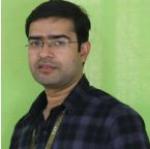
Dr. Chandan Kumar

Assistant Professor and Coordinator

+91-8896677605, Ph.D.(IIT-BHU, Varanasi), M.Tech (NIT-Rourkela),GATE-Electronics & Instrumentation, B.Tech. (ITM University)

chandan.kumar@curaj.ac.in

91

->More

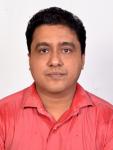
Dr. Manas Kumar Nag

Assistant Professor

Postdoc from National Institutes of Health, Bethesda USA, Ph.D. from IIT Kharagpur (Medical Image Analysis)

manas.nag@curaj.ac.in

->More

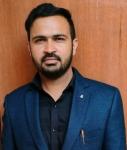
Dr. Sandeep Choudhary

Assistant Professor

Ph.D. (Biomedical Eng., IIT Indore), M.Tech. (Biomedical Eng., IIT Kharagpur), B.Tech. (Biomedical Eng., SGSITS Indore)

sandeep.choudhary@curaj.ac.in

->More

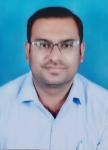
Dr. Vikrant Singh Rajput

Assistant Professor

B. Tech (Biotechnology, Amity University, Noida); GATE (Life Science); Ph.D (Biological Science, CSIR-Indian Institute of Integrative Medicine, Jammu); PDF-Indian Institute of Technology (IIT) Roorkee; DHR Young Scientist-JNU Delhi.

vikrant.rajput@curaj.ac.in

->More

Other

Dr. Purusottam Mishra

Assistant Professor

M. Tech (Nanotechnology, Indian Institute of Technology Roorkee) Ph.D. (Biosciences and Bioengineering, Indian Institute of Technology Roorkee) GATE Biotechnology

purusottam@curaj.ac.in

->More

Following laboratories are functional:

1. Cell & Molecular Biology laboratory.

2. Biosensor and Transducer laboratory.

3. Biomedical Instrumentation laboratory.

4. Signal & Image processing Laboratory.


Research themes/interests of BME department:

1. Therapeutics discovery Laboratory (under Swastha Bharat & biopharma mission): World Health Organization (WHO) has acknowledged that we are heading towards a post antibiotic era, particularly due to unprecedented rise in drug resistance along with limited availability of antimicrobial and affordable point of care diagnostics. Therefore, the department at present is focusing on antimicrobial drug discovery and point of care diagnostics with focus on tuberculosis.  A multi pronged approach is followed for tackling this ever growing health care issue which include identification of novel drug target relevant to in vivo systems, innovative approaches to drug discovery for re-sensitization of existing drugs, exploring new and effective antigens for diagnostics and the use of immunoinformatics for vaccine design and development. The expansion under this theme shall include the exploration of novel approaches towards development of technologies evaluating PK/PD of drugs to minimise the use of animals.


2. Biomedical Sensors Lab (under Swastha Bharat and Swach Bharat):: The theme is dedicated towards the development of portable real-time fluorescent detection system (low cost) and implication in the field of food sample monitoring, health care diagnostic, and environment sample monitoring along with different biosensors (pH, urea, and glucose biosensors) using fluorophores, carbon quantum dots, polymers, and enzymes, establishment of a fluorescent-based technique (solution phase-based detection, thin-film-based detection) and point-of-use devices for analyzing different samples in different matrices, design of an algorithm for plaque detection in Coronary Artery, Designing and implementing repetitive pulse generators (microseconds) for Electrochemotherapy applications, developing understanding to produce a Nano-particle-based drug delivery system for cancer diagnostic and effective therapy and design and develop different image and signal processing techniques for better understanding.


3. Medical image analysis Lab (under Ayushman and Swastha Bharat): The application of AI for medical image analysis has given a boost to digital health. Digital health has given a key of advanced healthcare facility for the rural population. AI can assist the clinician in analysis of radiological images such as computed tomography (CT) and magnetic resonance imaging (MRI). The time can be a factor in case of cerebral attack or stroke. In India, the clinicians are overburdened and the application of AI can assist the clinician and save time and remove false negative and reduce false positive. The department is working on early detection of ischemic stroke from CT scans. Though, MRI is used for early in detecting cerebral stroke, but CT being economical is generally preferred over MRI. CT scan does not show any sign of ischemic stroke if done in early hour of stroke. AI can be assistive in this case for detecting the early sign of ischemic stroke and assist the clinician in early diagnosis of ischemic stroke.

4. One-Health and Food Safety (Under the Swastha Bharat and One Health Consortium)- Globally, Antimicrobial Resistance (AMR) is one of the most rapidly growing concerns for human and animal health, food safety, and the environment. Over the recent years, a growing body of evidence suggests that frequent and uncontrolled use of antibiotics in human medicine as well as in non-clinical settings such as in veterinary/agriculture has resulted in the rapid evolution and spread of antibiotic resistance. The main research is focused on understanding the burden of antibiotic resistance in the “One-Health” context, which includes animal health, human health, and environmental health; our research also focuses on the development of new strategies (Drug Discovery and Drug Repurposing) to combat MDR food-borne pathogenic bacteria which are directly related to public health and food safety.

Achievement Title Attached File

News & Announcements 

  • The BME department congratulates Mr. Aryan Karmakar, Mr. Anil Kumar Kaler, Mr. Jatin Raj, Ms. Tanisha Sharma, and Mr. Shubham Sharma for qualifying GATE-Biomedical Engineering 2025 with AIR 27, 50, 65, 121, and 174, respectively.

  • The BME department congratulates Mr. Aman Krishna Sahu, Mr. Vikash Kumar Varshney, Ms. Sandhya Chauhan, and Mr. Shubham Sharma for qualifying GATE-Biomedical Engineering 2024 with AIR 4, 27, 2,9, and 106, respectively.

  • The BME department greets Mr. Aman Krishna Sahu for joining IIT Delhi, Mr. Vikash Kumar Varshney for joining IIT Delhi, and Ms. Sandhya Chauhan for joining IIT Kharagpur, for M.Tech. Program.  

  • The BME department greets Ms. Taneesha Sharma for joining IIT Kanpur, Mr. Aryan Karnakar for IIT Kharagpur, and Durgesh Nishad for NIT Raipur for M.Tech. Program. 


Placements

  • Ms. Arya Nanda got placed in Sirma Johari Digital Health Care Ltd., Pune as a Biomedical engineer.

  • Mr. Lalit Kumar got placed in S S Medical Systems (India) Pvt. Ltd., Lucknow, as a Sr. Manager – Service & Operations.

  • Mr. Raghvendra Hardeniyan got placed in S S Medical Systems (India) Pvt. Ltd., Lucknow, as a Technical Trainee at Grade G1.

  • Ms. Ankita Raj got placed in Rigel India Private Limited, New Delhi, as a Biomedical Engineer. 

  • Mr. Shree Ganesh Shindhe got placed in Dr L H Hiranandani Hospital, Bombay as a Biomedical Engineer.

  • Ms. Yati Gupta got placed in Enertech Pvt. Ltd, Jaipur as a Biomedical Engineer.

  • Mr. Krishan Meena got placed in AVI Health Care Pvt. Lmt. as a Biomedical Engineer.

  • Mr. Hussain S got placed in GenWorks as an application specialist.